 905-953-9499


Why Relying Solely on Lacrosse Ball Stretches Might Slow Your Recovery Journey
TL;DR
While lacrosse ball stretches provide temporary relief for muscle tension, relying on them alone misses the root causes of movement dysfunction and can delay recovery. Professional physiotherapy assessment identifies underlying issues and creates personalized treatment plans that address the source of pain rather than just symptoms. A comprehensive approach combines manual therapy, corrective exercises, and movement education for faster, more lasting recovery results.
───────────────────────────────────────────
Introduction
I see it regularly in my practice: active individuals rolling around on lacrosse balls, hoping to work out their knots and speed up recovery. While I appreciate the dedication to self-care, I’ve noticed that those who rely exclusively on this DIY approach often find themselves stuck in the same pain patterns month after month.
Don’t get me wrong – lacrosse ball stretches have their place in a recovery toolkit. However, when used as your only strategy, they often miss the bigger picture. Movement dysfunctions, compensatory patterns, and the root causes of your pain require a more comprehensive approach to achieve real, lasting improvement.
What Are Lacrosse Ball Stretches and Why Are They So Popular?
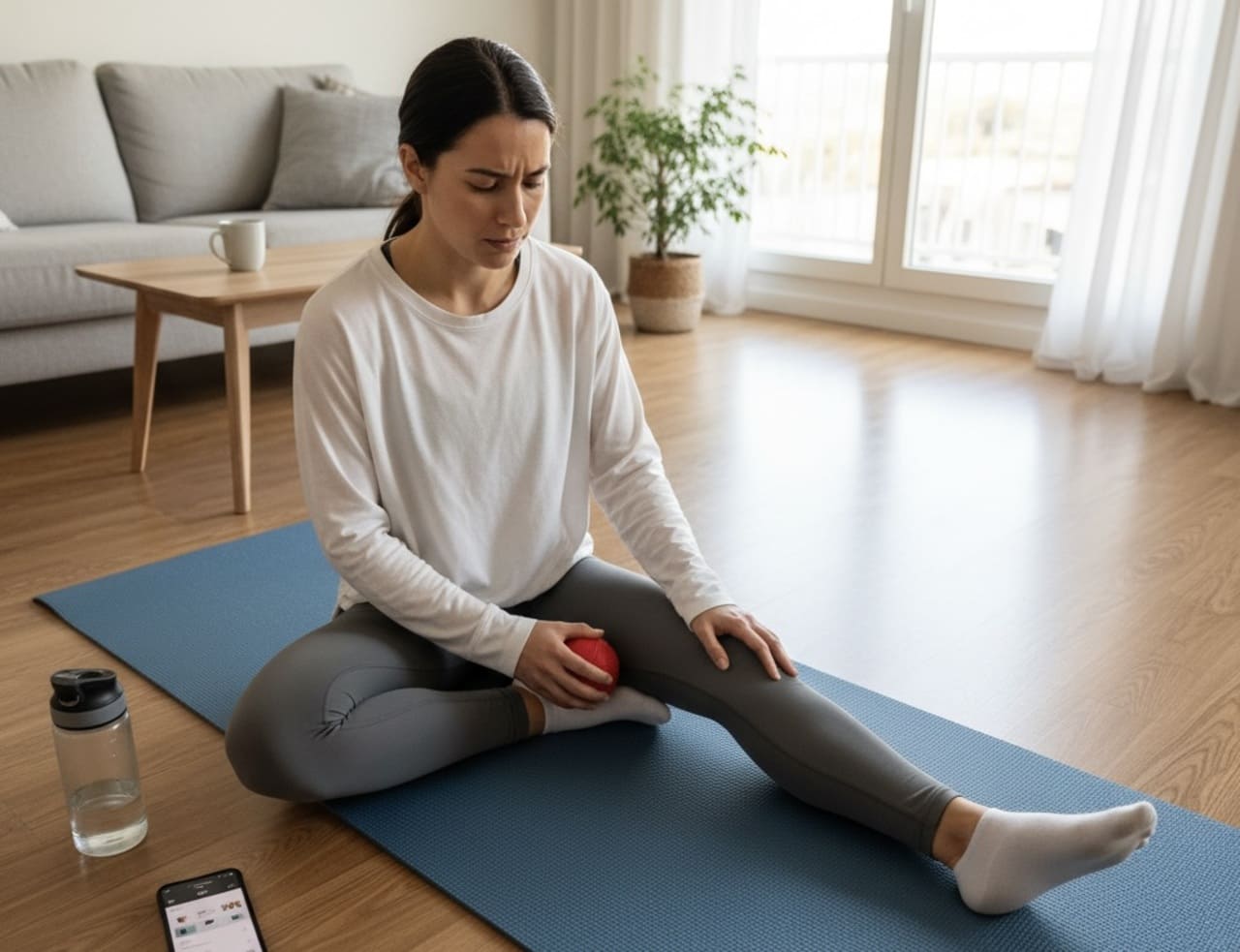
Lacrosse ball stretches, also known as self-myofascial release, involve using a firm ball to apply pressure to specific muscle groups and trigger points. The technique aims to reduce muscle tension, improve flexibility, and break up adhesions in soft tissue.
The popularity of this method stems from its accessibility and immediate feedback. You feel the pressure, you feel the release, and there’s an instant sense that you’re “doing something” about your pain. The technique became mainstream through fitness communities and social media, where athletes and weekend warriors share their favorite release techniques.
However, this surface-level approach addresses symptoms rather than causes. While you might feel temporary relief after a session, the underlying movement patterns that created the tension in the first place remain unchanged. This is why many people find themselves reaching for that lacrosse ball again and again, stuck in a cycle of temporary fixes.
What Are the Limitations of Using Only Lacrosse Ball Stretches?
The biggest limitation is that muscle knots and tension are rarely the primary problem. They’re typically symptoms of deeper movement dysfunctions, poor biomechanics, or compensation patterns that develop over time.
When you focus solely on releasing tight spots, you miss the opportunity to identify why those areas became tight in the first place. For example, tight hip flexors might be compensating for weak glutes, or shoulder tension could stem from poor thoracic spine mobility. Rolling the symptom doesn’t address the cause.
Risk of Improper Technique
Without proper guidance, aggressive or incorrect lacrosse ball use can actually worsen your condition. I’ve seen people create bruising, irritate inflamed tissue, or apply excessive pressure to areas that need gentle, progressive treatment instead. Research shows that improper recovery techniques can interfere with the body’s natural healing processes and potentially increase injury risk.
Missing the Movement Component
Recovery isn’t just about tissue quality – it’s about restoring functional movement patterns. Lacrosse ball stretches are passive interventions that don’t teach your body how to move better. True recovery requires active components that retrain movement patterns and build resilience against future injuries.
Why Is Professional Physiotherapy Assessment Critical for Recovery?
A comprehensive physiotherapy assessment goes far beyond identifying where you feel pain or tension. We examine your entire movement system to understand the relationships between different body regions and identify the root cause of your symptoms.
During an assessment, I evaluate your movement patterns, joint mobility, muscle strength, and coordination. This systematic approach reveals compensation patterns that self-treatment methods miss entirely. For instance, what you perceive as a “tight” muscle might actually be an overworked muscle trying to stabilize for a weak or dysfunctional area elsewhere.
Personalized Treatment Planning
Based on assessment findings, we create a targeted treatment plan that addresses your specific movement dysfunctions. This might include manual therapy techniques, corrective exercises, movement retraining, and yes, sometimes self-massage techniques like lacrosse ball work – but used strategically as part of a larger plan.
Professional physiotherapy provides the clinical reasoning and expertise to determine which interventions will be most effective for your unique situation. We monitor your progress objectively and adjust the treatment approach based on how your body responds.
How Does Professional Treatment Compare to Self-Care for Muscle Recovery?
The difference between professional treatment and self-care lies in precision, progression, and comprehensive planning. While self-care methods like lacrosse ball stretches provide a broad, general approach, professional treatment offers targeted interventions based on specific assessment findings.
| Aspect | Self-Care Only | Professional Treatment |
|---|---|---|
| Problem Identification | Based on where you feel symptoms | Comprehensive movement assessment identifies root causes |
| Treatment Selection | One-size-fits-all approach | Personalized interventions based on specific dysfunctions |
| Progression | Same technique repeatedly | Progressive plan with measurable milestones |
| Education | Limited understanding of why problems occur | Understanding of movement patterns and prevention strategies |
Professional treatment also incorporates evidence-based techniques that you cannot perform on yourself. Manual therapy, joint mobilization, and specific exercise prescription require clinical expertise to apply safely and effectively.
Enhanced Recovery Efficiency
When we combine clinical interventions with appropriate self-care techniques, recovery accelerates significantly. I often teach patients when and how to use tools like lacrosse balls as part of their homework, but within the context of a larger treatment strategy that addresses their specific needs.
What Are More Effective Recovery Methods Beyond Lacrosse Ball Stretches?
Effective recovery requires a multi-faceted approach that addresses movement quality, strength, and functional performance. Research from the World Health Organization emphasizes that comprehensive physical activity interventions are more effective than isolated techniques for preventing injury and promoting recovery.
Movement Pattern Correction
The foundation of lasting recovery lies in identifying and correcting faulty movement patterns. This involves specific exercises that retrain your nervous system to move efficiently and distribute forces appropriately throughout your body.
Progressive Strengthening
Weakness often underlies many movement dysfunctions. A progressive strengthening program targets specific muscle groups while integrating functional movement patterns that translate to your sport or daily activities.
Manual Therapy Techniques
Skilled manual therapy goes beyond what any self-massage tool provides. Techniques like joint mobilization, soft tissue mobilization, and dry needling address specific tissue restrictions and joint limitations that limit your recovery potential.
Education and Self-Management
Understanding why your injury occurred and how to prevent recurrence is crucial for long-term success. This includes learning proper warm-up techniques, recognizing early warning signs, and implementing appropriate self-care strategies at the right times.
Key Takeaways
- Lacrosse ball stretches provide temporary symptom relief but miss the root causes of movement dysfunction and pain patterns.
- Professional physiotherapy assessment identifies underlying movement issues that self-treatment methods cannot detect or address.
- Relying solely on self-massage techniques can delay recovery and may worsen symptoms if applied incorrectly or excessively.
- Effective recovery requires a comprehensive approach combining manual therapy, corrective exercises, and movement education.
- Professional treatment provides personalized, progressive interventions that address your specific dysfunction patterns rather than generic symptom management.
- Combining clinical expertise with appropriate self-care techniques accelerates recovery and reduces the risk of reinjury.
Ready to Move Beyond Quick Fixes?
If you’ve been stuck in a cycle of temporary relief with lacrosse ball stretches, it’s time to address the root cause of your symptoms. At Athletify, we provide comprehensive movement assessments and personalized treatment plans that get you back to performing at your best.
Our approach combines clinical expertise with evidence-based techniques to identify and correct the movement dysfunctions that keep you sidelined. We’ll teach you when and how to use self-care techniques effectively as part of a larger recovery strategy tailored to your specific needs and goals.
Stop settling for temporary fixes and start building lasting recovery. Book your assessment today and discover what comprehensive, goal-driven physiotherapy can do for your performance and long-term health.
Frequently Asked Questions
What are the risks of relying only on lacrosse ball stretches for recovery?
The main risks include missing underlying movement dysfunctions that cause recurring symptoms, potential tissue irritation from improper technique, and delayed recovery due to addressing symptoms rather than root causes. Without proper assessment, you might also aggravate inflamed tissue or create compensation patterns that lead to new problems.
When should I see a physiotherapist in Newmarket for muscle recovery?
You should seek professional help when self-care methods provide only temporary relief, when symptoms persist or worsen despite consistent self-treatment, or when pain begins affecting your daily activities or performance. Early intervention typically leads to faster, more complete recovery outcomes.
How does professional physiotherapy support better results compared to self-care methods?
Professional physiotherapy provides comprehensive movement assessment to identify root causes, personalized treatment plans based on your specific dysfunctions, progressive interventions that evolve with your recovery, and education about prevention strategies. This systematic approach addresses the source of problems rather than just managing symptoms, leading to more lasting results and reduced reinjury risk.